Building in Türkiye, exhibiting in Europe: how stand production works
From design approval and organiser rules to customs documents, build-up and storage: the step-by-step process for a stand built in Türkiye and set up at a European show.

- Published
- Reading time5 min read


An exhibition stand built in Türkiye for a European show goes through design approval, technical approval under the organiser's rules, workshop production and test assembly, transport and customs, on-site build-up and dismantling, and storage. Stand materials that will return can travel under temporary-import documents such as the ATA Carnet; the details vary by country and goods, so plan them with a customs broker.
A stand built in Türkiye for a European trade show passes through design approval, technical approval under the organiser's rules, workshop production and test assembly, transport and customs, on-site build-up and dismantling, and finally storage and reuse. The advantage of this model is production in a controlled workshop; the risk lies in logistics and paperwork. Planned well, the stand arrives on site ready and tested.
Design approval and organiser technical rules
Every venue and organiser has its own technical regulations. Read them before the design is final, or an approved design may have to change on site. Typical checks include:
- maximum height, the finish of walls facing neighbouring stands and open-side rules,
- rigging points and limits for suspended structures,
- structural calculations and extra approvals for double-deck stands,
- fire classification of materials and required certificates,
- order deadlines for electricity, water, compressed air and internet.
Many shows require stand plans to be submitted for technical approval by a set date. Large organisers, such as the German trade fair venues, apply these rules in detail.
Production and test assembly
After approval, technical drawings are prepared and production starts: structure, furniture, finishes, lighting and printed graphics. For a stand going abroad, the most important step is assembling it once in the workshop. Test assembly catches dimension and joint errors in the workshop rather than on site, and numbering every part with a clear assembly plan speeds up the build crew.
Transportability belongs in the design phase too: part size, weight, packaging and how everything fits into a truck or container directly affect cost and damage risk.
Transport and customs documents
If stand materials and exhibits will return to Türkiye after the show, temporary import can be used. A widely used document for this is the ATA Carnet, an international customs document that allows goods to enter participating countries temporarily without paying duties and then leave again. In Türkiye, carnets are issued through chambers of commerce and industry.
Points to watch:
- The goods list on the carnet must match the shipment exactly.
- Items consumed or handed out at the show (catalogues, samples, giveaways) may fall outside temporary import and need separate handling.
- Rules vary by country and type of goods, so plan with a customs broker and a forwarder experienced in exhibition logistics.
Venues usually have official logistics partners who handle site access, unloading and empty-packaging storage.
Build-up and dismantling
Build-up and dismantling windows are set by the organiser and are fixed. The crew is planned around them; at many venues, electrical connections and rigging may only be carried out by official contractors. For crews sent to Europe, obligations such as work permits, posting notifications and social security documents vary by country and should be checked in advance. Once built, the stand is cleaned and handed over after a final check. Careful packing during dismantling decides whether the stand can be reused.
Storage and reuse
A modular stand can be adapted to different sizes and layouts and used at several shows, which makes sense for both cost and sustainability. Storage can be in Türkiye or in Europe depending on the show calendar, with graphics and worn surfaces refreshed before each event.
How Grafikare approaches it
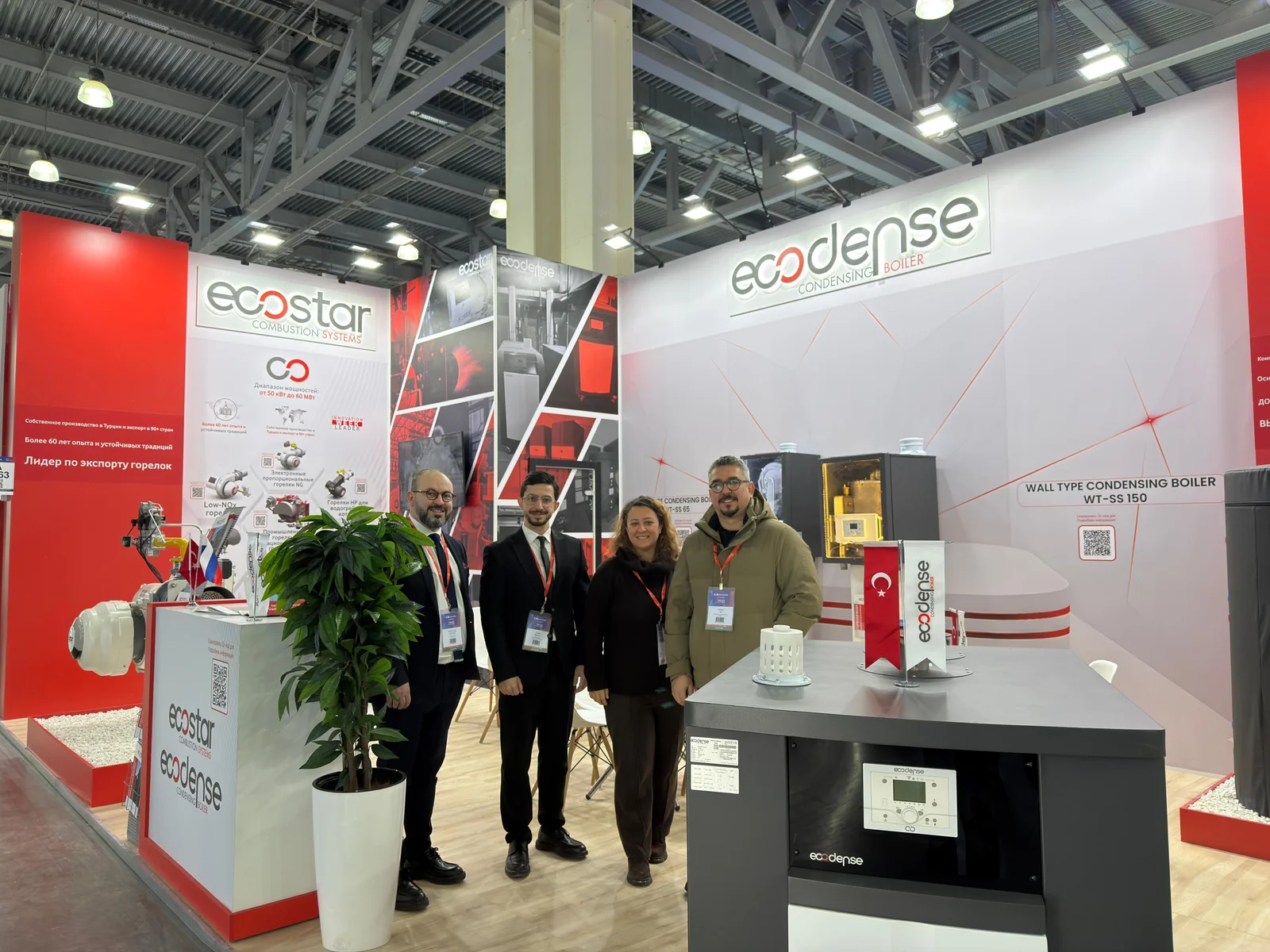
We plan design, technical approval, production, logistics coordination and build-up as one process. As in our projects at shows such as Messe Frankfurt ISH for Ecostar and Aquaflame in Moscow for Ecodense, we address organiser rules at the start of design, test the stand through workshop assembly and manage customs together with specialist partners.
Frequently asked questions
What is an ATA Carnet?
An ATA Carnet is an international customs document that lets goods such as exhibition materials enter participating countries temporarily without paying duties and then return. In Türkiye it is issued through chambers of commerce and industry.
Why assemble the stand in the workshop first?
Test assembly catches dimension and joint errors before the limited build-up window on site. Numbered parts and an assembly plan also speed up the on-site build.
Can catalogues and samples for distribution travel on the carnet?
Usually not; items consumed or given away at the show do not return and may fall outside temporary import. Plan separate customs handling for them with a broker.